LaTeX templates and examples — Chemistry
Recent
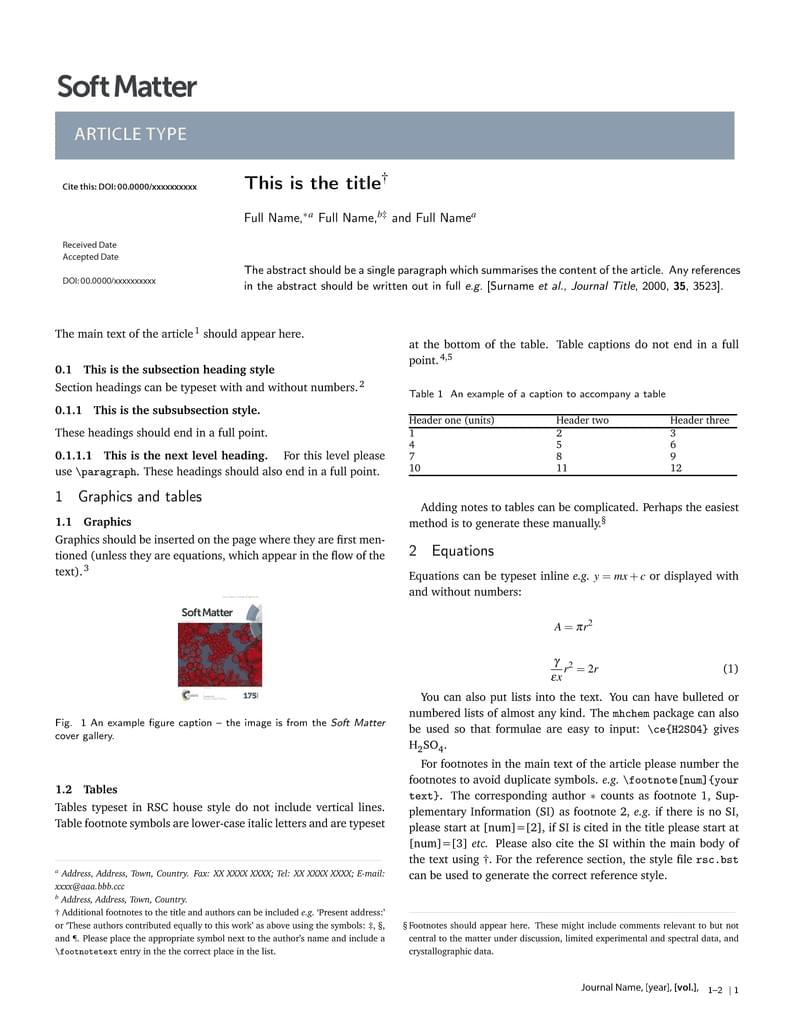
This template for the preparation of LaTeX submissions to Soft Matter includes a direct link to the journal for easy submission of your finished article. To begin writing your article, simply click the 'Open as Template' button above. When your article is complete, simply click the 'Submit to Journal' link from within Overleaf to submit your files to Soft Matter. If you're new to Overleaf, we've provided a short tutorial video to help you get started. This template uses the main LaTeX ARTICLE template for RSC journals. Copyright The Royal Society of Chemistry 2019. Use of the Overleaf platform and associated services (including the Soft Matter Template) is subject to the Overleaf terms of service.
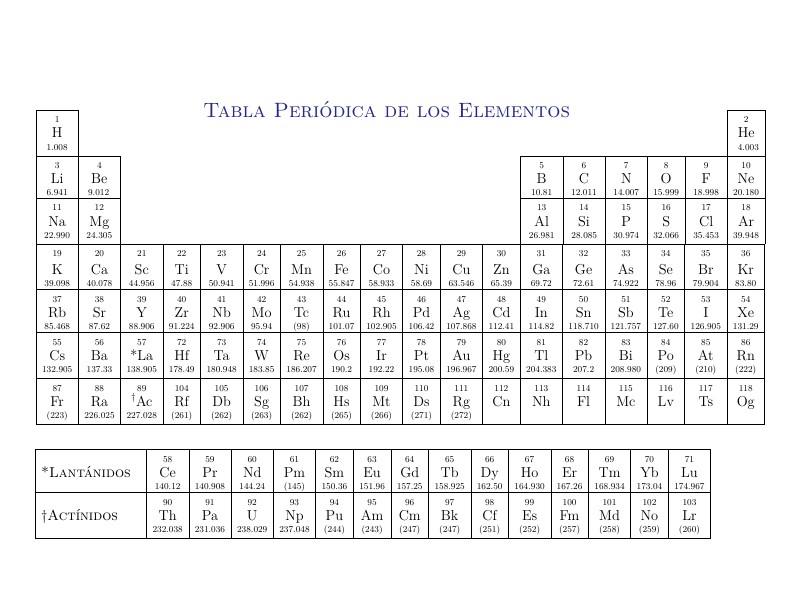
periodic table with all the known elements in Spanish
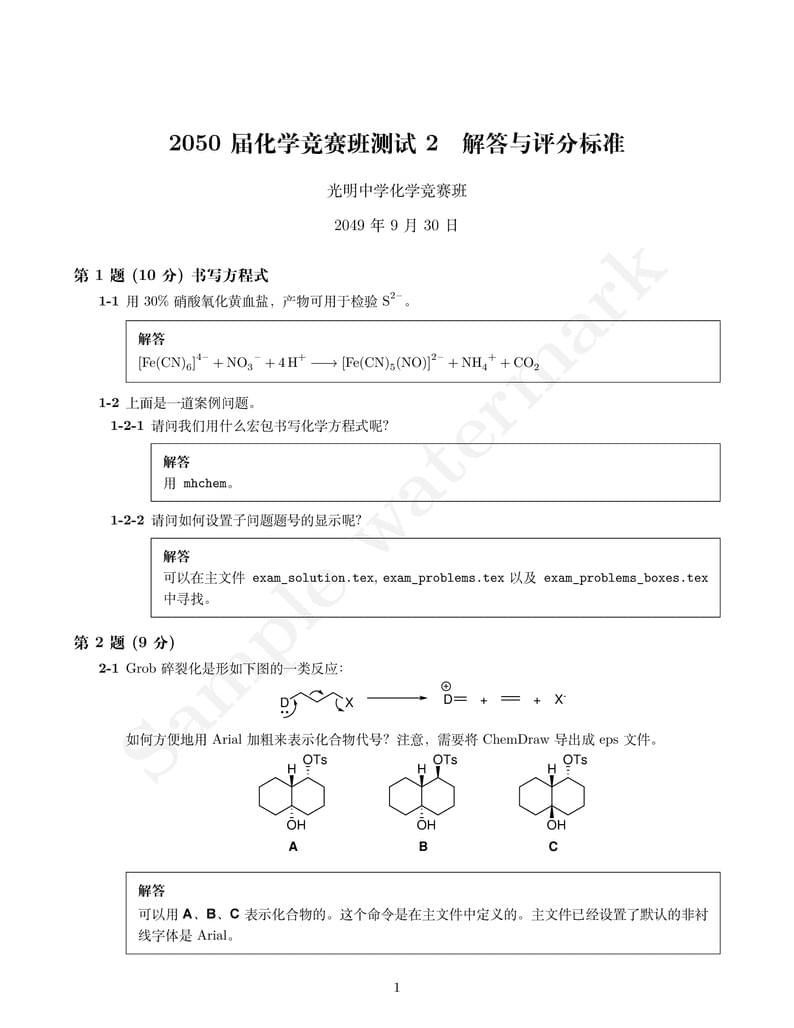
这是一个中文的化学试题模板,可以制作试题、带有答题框的试题、试题与参考答案。推荐在overleaf上使用,也可以下载至本地,使用xelatex编译。 作者的联系方式:kevinjadams@pku.edu.cn,使用请注明出处。
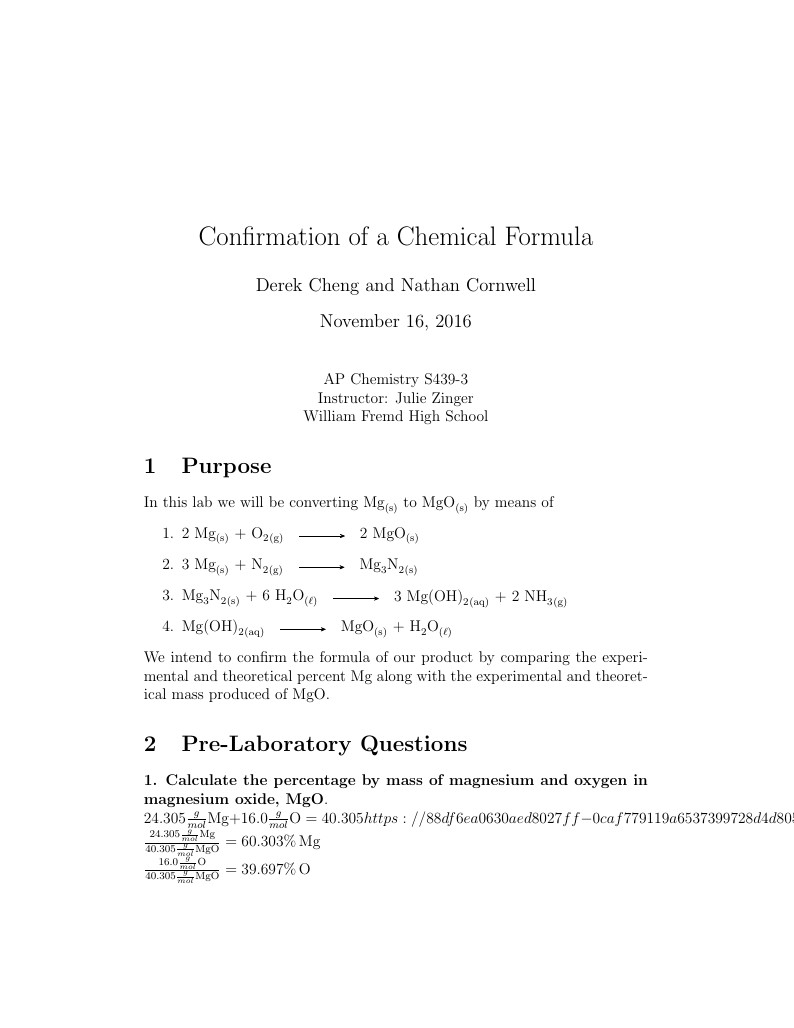
In this lab we will convert solid magnesium to solid magnesium oxide. We intend to confirm the formula of our product by comparing the experimental and theoretical percent magnesium along with the experimental and theoretical mass produced of magnesium oxide.
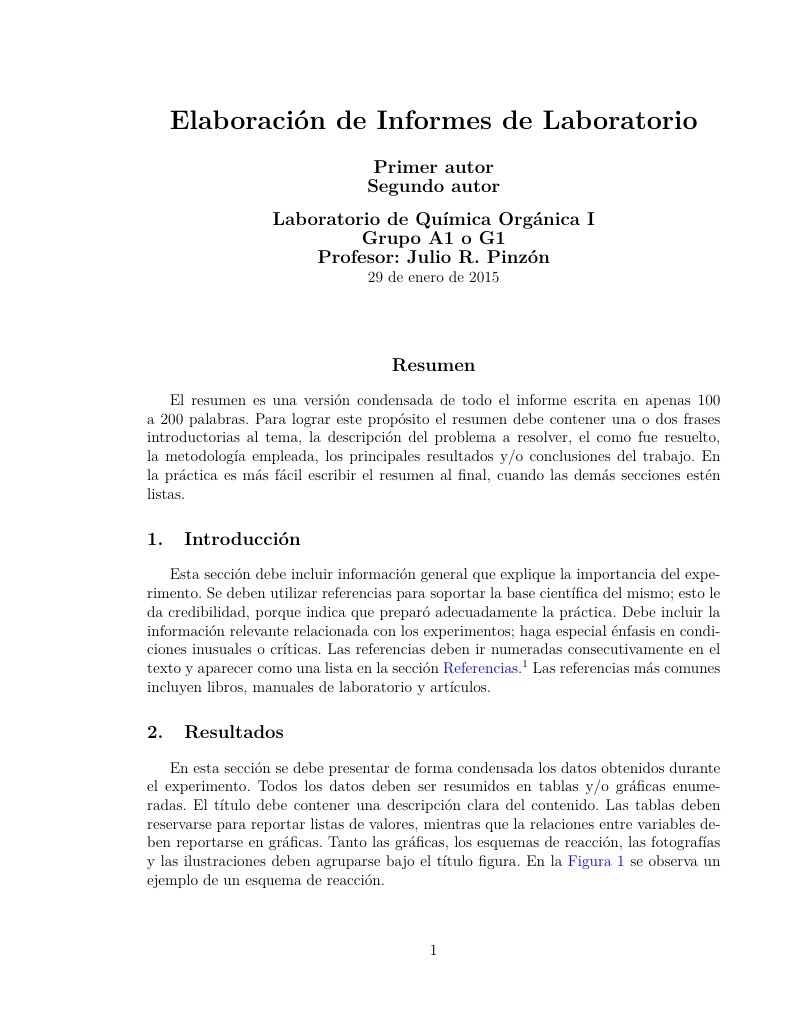
Plantilla para informes de laboratorio de orgánica I
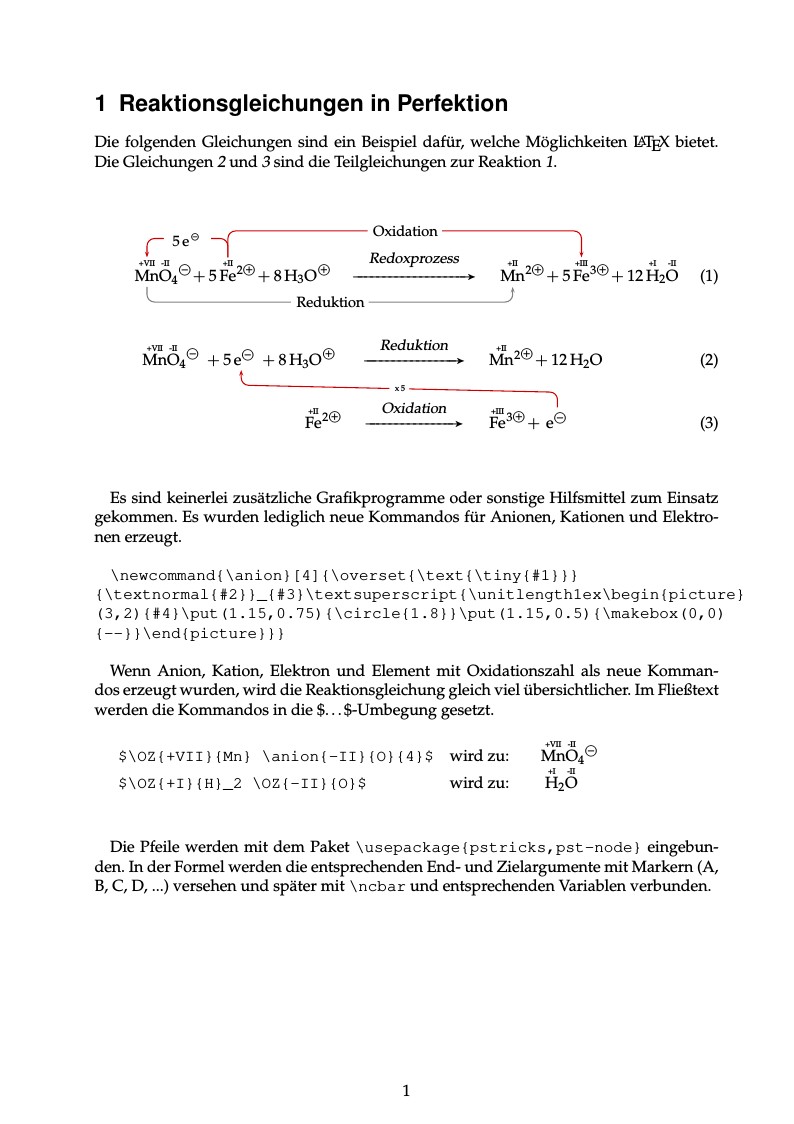
Mit dieser Anleitung können chemische Reaktionsgleichungen produziert werden. Aus didaktischen Gründen wird u.a. das Package "PSTricks" verwendet, um Pfeile für die Verdeutlichung der Elektronenwandung umzusetzen. Die Kommandos \anion oder \kation erleichtern außerdem das Einbinden von chemischen Formeln im Fließtext ohne den Code unübersichtlich zu machen. $\anion{-II}{O}{}{2}$ produziert das Oxid-Anion mit der Oxidationszahl 2... Achtung: mit "LaTeX dvipdf" kompilieren, sonst werden utf8-Warnungen ausgegeben (Problem bekannt...)
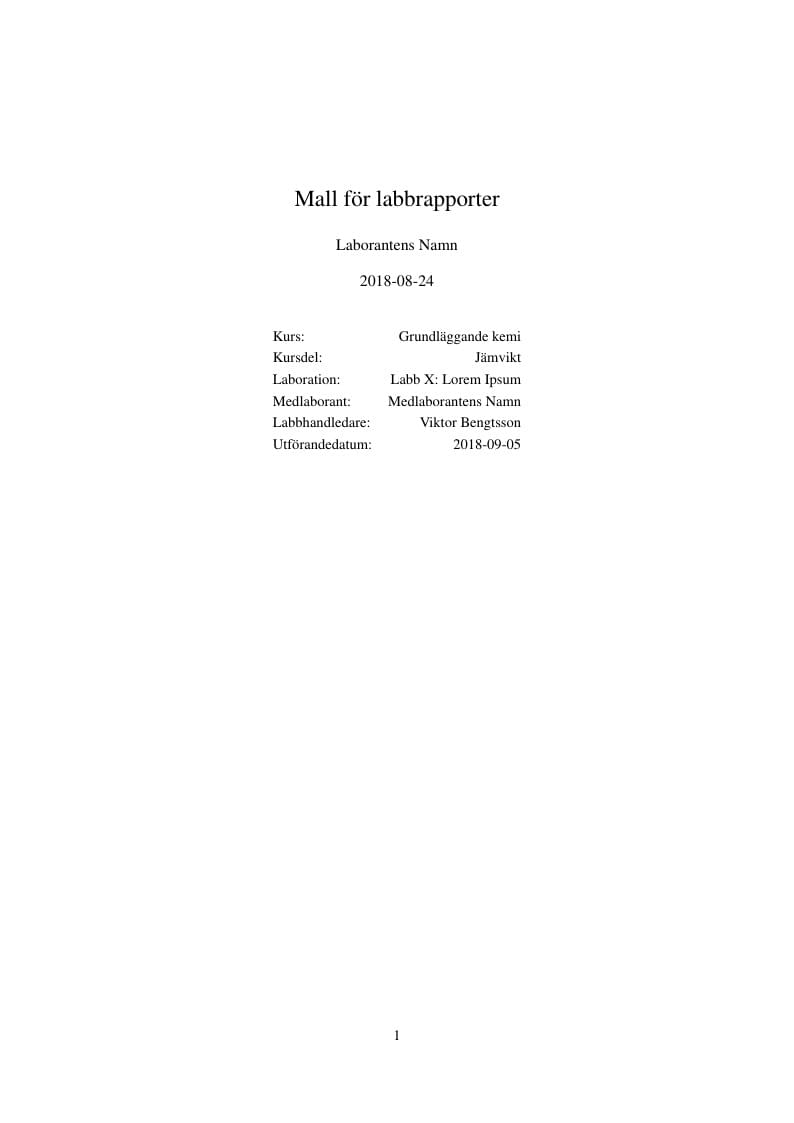
Laboratory report template Template made for the course Basic Chemistry at Stockholm University Template creation date: 2018-08-24
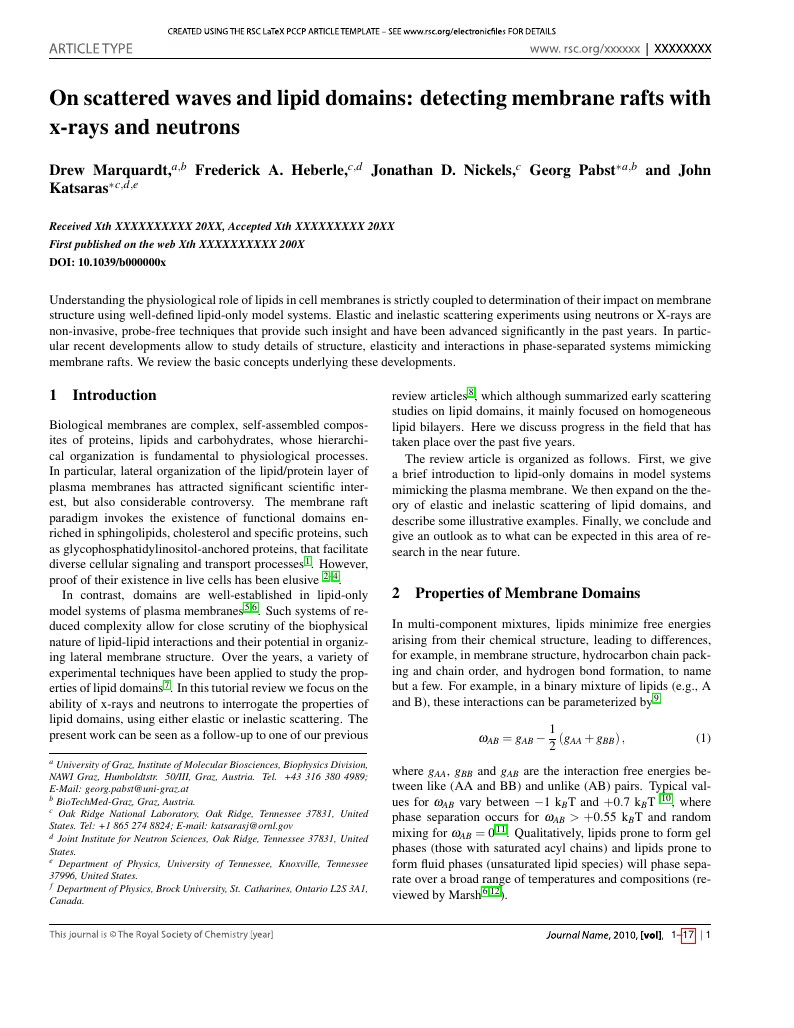
Understanding the physiological role of lipids in cell membranes is strictly coupled to determination of their impact on membrane structure using well-defined lipid-only model systems. Elastic and inelastic scattering experiments using neutrons or X-rays are non-invasive, probe-free techniques that provide such insight and have been advanced significantly in the past years. In particular recent developments allow to study details of structure, elasticity and interactions in phase-separated systems mimicking membrane rafts. We review the basic concepts underlying these developments. Written using the LaTeX template for Royal Society of Chemistry (RSC) journals
\begin
Discover why over 30 million people worldwide trust Overleaf with their work.